Local markets behave very differently following loss of exclusivity (LOE), shaped by variation in policy, competitive dynamics, and stakeholder behavior. As previously explored in our discussion of loss of exclusivity market dynamics, understanding these local dynamics is a critical first step.
The more challenging question follows: how should global and local teams translate this understanding into effective late lifecycle management plans?
From a global or regional perspective, the diversity is clear. In some markets, continued promotional investment may still allow a brand to defend share and value. In others, regulatory or policy constraints remove any clear rationale for sustained commercial activity. Yet global guidance must still be coherent, directional, and practical, while remaining relevant to local teams operating in fundamentally different environments.
At the same time, local teams face an equally complex challenge. How should global recommendations, which have been developed with many disparate market realities in mind, be interpreted and applied locally without becoming either overly generic or strategically misaligned?
This is where market archetyping becomes essential.
Market Archetyping for Pharma
Market archetyping (often referred to as clustering) provides a structured way to simplify complexity without losing strategic nuance. Done well, it allows global teams to group markets with similar characteristics, develop differentiated strategic guidance, and support markets in translating global intent into locally appropriate late lifecycle plans.
However, not all archetyping approaches are equally effective, particularly in the context of late lifecycle planning.
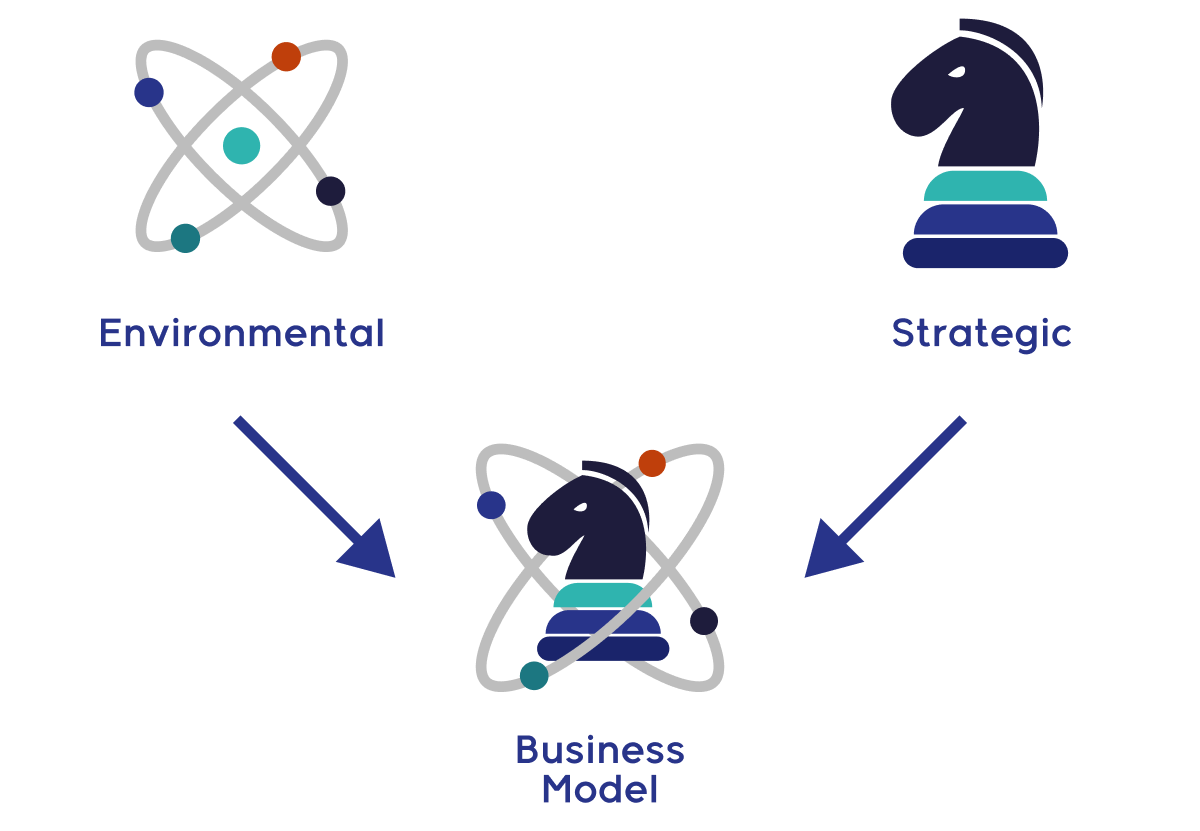
In our experience, two approaches are most commonly used: environmental archetyping and strategic archetyping. While both offer value, each also has inherent limitations when applied in isolation.
A third approach: business model archetyping, offers a more robust alternative. This hybrid methodology combines the strengths of environmental and strategic approaches, resulting in archetypes that are strategically meaningful while remaining grounded in the realities of local market environments.
Limitations of Environmental Archetyping
Environmental archetyping groups markets based on shared post‑LOE dynamics. Common dimensions include:
- Policy and preference environments
- Intensity and structure of generic competition
- Pricing and reimbursement considerations
- Stakeholder behaviors and segmentation
Using this information, global teams can outline which tactical options may (or may not) be viable within a given environment.
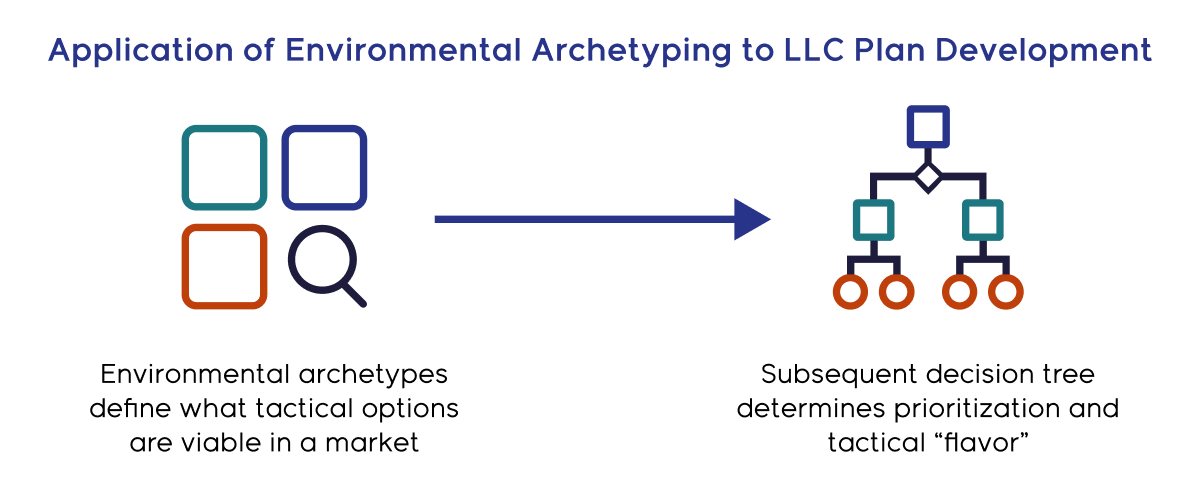
The challenge with this approach is balance. Late lifecycle environments are inherently multi‑dimensional, and the number of potentially relevant variables can quickly expand. Archetypes can therefore become either:
- Over‑simplified, obscuring critical differences between markets, or
- Overly complex, resulting in frameworks that lack clarity and directional value
In both cases, the outcome is often guidance that is difficult to communicate, difficult to operationalize, and insufficiently anchored to clear strategic intent.
Limitations of Strategic Archetyping
Strategic archetyping starts from the opposite direction. Here, archetypes are defined by the intended strategic approach to late lifecycle management. Common examples include:
- Second brand strategies
- Authorized generic strategies
- Price equalization strategies
Once these strategic archetypes are defined, supporting market characteristics are identified and used to map individual markets accordingly.
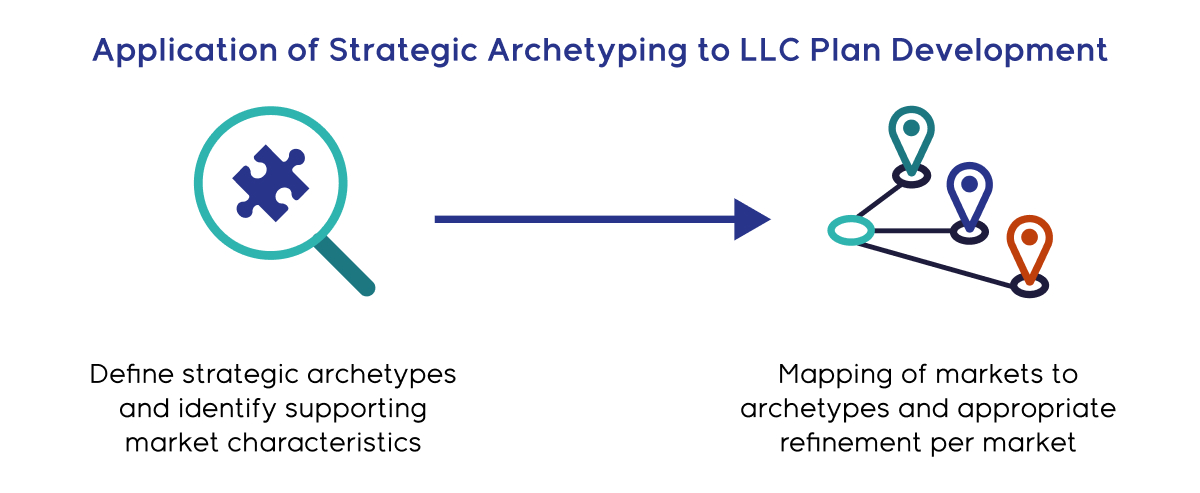
While intuitive, purely strategic archetyping introduces two key limitations:
Firstly, it tends to narrow the lens too quickly, anchoring markets to a single strategic pathway and potentially overlooking broader value‑preserving opportunities
Secondly, many markets display characteristics that support multiple strategic approaches, making it difficult to clearly differentiate why one option should be favored over another
For these reasons, we believe neither environmental nor strategic archetyping alone provide a sufficiently robust foundation for late lifecycle planning. Business model archetyping bridges this gap.
A Hybrid Approach: Business Model Archetypes
Rather than defining archetypes solely by environment or by strategy, this approach frames archetypes around coherent late lifecycle business models. Each is strategically oriented yet explicitly informed by a small number of high‑impact environmental dimensions.
Well‑designed business model archetypes should:
- Consider the full spectrum of tactical options available to a brand
- Account for resourcing and investment implications
- Clearly articulate the strategic objective and what “success” realistically looks like for markets within each archetype
Equally important is what they should not attempt to do. Environmental factors should only be included where they meaningfully influence the viability and selection of a business model. Attempting to capture every source of market variability recreates the multi-dimensional complexity that archetyping is meant to resolve.
Even with the right balance, it is important to recognize that variability within archetypes will remain, and individual markets still require tactical adaptation based on specific market characteristics. The role of the business model is not to prescribe execution, but to set strategic boundaries, narrow the menu of options, and provide meaningful direction.
Putting Business Model Archetyping into Practice
Successfully applying a business model archetyping approach requires more than a well‑designed framework. Several foundational elements are critical:
- A robust understanding of the asset and the expected diversity and evolution of post‑LOE environments
- A truly cross‑functional development process spanning global, regional, and local perspectives
- A collaborative roll‑out and communication strategy that supports local interpretation and ownership
Align Strategy has extensive experience supporting global teams through this process, developing tailored business model archetypes and implementation approaches that have enabled the translation of global late lifecycle strategies into effective, locally relevant plans.
If you would like to learn more about how a business model archetyping approach could bring greater clarity and direction to your late lifecycle planning, please reach out to us or explore our late lifecycle management services →
Next up, discover our PSVA Framework, which helps teams break lifecycle tactics down into four categories: product, solution, value, and asset. Our toolkit details what the PSVA framework is and why it’s useful with a closer look at the late lifecycle tactics available, illustrated with 10 pharma case studies.