If you’re responsible for maximizing the value of an established pharmaceutical brand post‑loss of exclusivity (LOE), you will likely find there is limited opportunity to compete directly with generics or biosimilars. A second brand strategy (also known as dual branding) could be the answer and offer a compelling alternative.
Optimizing Assets Beyond the Originator
As development costs rise and clinical success rates fall, the pressure to optimize the late lifecycle of a brand has never been greater. With loss of exclusivity delivering complex market dynamics, including multi-source competition, price erosion, and fragmented access pathways, a broader, more adaptable approach is needed to unlock the true potential of an asset. One powerful but misunderstood late lifecycle tactic is the second brand.
What is a Second Brand Strategy?
A second brand is a product with overlapping strengths and/or indications that shares manufacturing lines (or a cell bank for a clone biologic) with a primary brand, but is marketed under a different brand name. It may include unique SKUs and may be sold by the originator company or through a third party. Depending on local market dynamics, the product may leverage the originator dossier or require a distinct brand or generic dossier.
While some companies undervalue the potential of a second brand, others recognize the opportunity but struggle to know when to execute it effectively, exposing the originator to unnecessary cannibalization risks. When approached with clarity and aligned to both stakeholder needs and internal priorities, a second brand can realize mutual value, sustain asset utilization, and reinforce positioning.
The key is understanding when a second brand is appropriate and how to deliver it in a way that strengthens rather than dilutes the asset’s overall performance.
What are the Key Drivers for a Second Brand Strategy in Late Lifecycle Management?
There are three potential drivers for pursuing a second brand strategy, all of which represent situations where the core originator brand can no longer compete effectively.
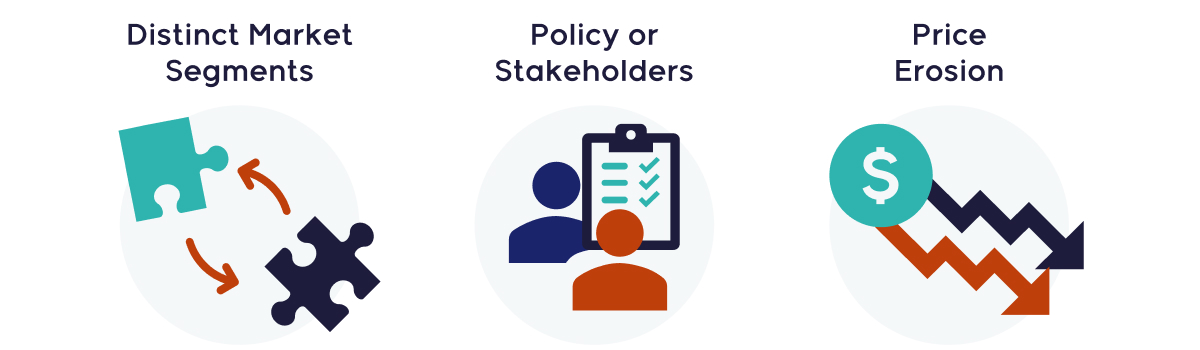
Distinct Market Segments
A second brand strategy is most relevant in environments where operationally distinct market segments exist that require fundamentally different value propositions. For example, in markets with clearly differentiated public and private sectors, the public segment may face substantial pricing pressure following biosimilar or generic entry, while the private market continues to sustain value. Discounting the originator to compete in the public market may undermine its positioning in the private segment. Introducing a second brand with greater pricing flexibility can help defend volume in the price‑sensitive public segment, while preserving the originator’s value and positioning in private segments where willingness to pay remains intact.
Policy or Stakeholder Preference
A second brand can also play a critical role where local policy frameworks or stakeholder preferences may directly constrain the viability of the originator brand. Following loss of exclusivity, procurement rules, reimbursement criteria, or domestic preferences may restrict access to originators. In such cases, a locally partnered second brand can help overcome these barriers, restore competitiveness, and sustain volume.
Price Erosion
In addition, second brand strategies become particularly important when price reductions to the originator risk unintended spillover effects. These may include cross‑formulation price linkage, cross‑border trade effects, or international reference pricing dynamics that erode value beyond the targeted market or segment. A second brand provides a mechanism to introduce pricing flexibility, while protecting the originator brand from broader portfolio or geographic value erosion.
Is a Second Brand Strategy Feasible in Your Market?
Even where the strategic rationale for a second brand is clear, feasibility must be assessed at the local market level. This assessment starts with the regulatory pathway, specifically, whether a second brand can be approved through a viable and recognized route, such as reliance on the originator dossier, an abbreviated pathway, or a third‑party arrangement without incremental clinical development, and how these options are viewed locally.
Feasibility also depends on pricing flexibility, including whether the second brand can be priced independently from the originator across markets, channels, or SKUs without triggering automatic linkage or unacceptable spillover effects.
Finally, the local pricing environment must be commercially viable. The second brand must be able to meet required price levels to compete effectively while remaining sustainable for the business.
Where one or more of these conditions cannot be met, a second brand may be strategically attractive but operationally impractical.
Is the Size of the Second Brand Opportunity Right for the Asset?
Once the value and feasibility of a second brand is established, the next step is determining whether the opportunity is right for your asset by evaluating the true size and strength of the opportunity.
Key questions to ask:
-
Is there meaningful room for volume growth?
Could lower pricing in a multi‑source environment unlock new demand? -
What does the competitive landscape look like for the molecule?
How many players exist and what share can your second brand realistically capture? -
Can your second brand differentiate in ways that matter?
Can manufacturer trust, supply reliability, SKU mix, or other practical differentiators give your second brand a competitive edge? -
How sustainable is the molecule’s long‑term trajectory?
Will it remain clinically relevant, or is competition from alternative molecules expected to constrain growth?
What Could a Second Brand Approach Look Like?
There is no one‑size‑fits‑all second brand model. The optimal approach depends on market contexts, particularly where the objective is to maximize access or defend value while avoiding cannibalization. This could look like:
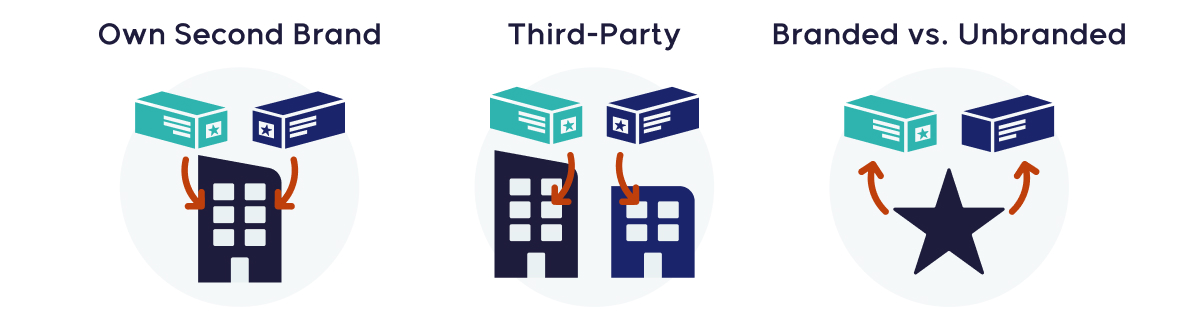
Own Second Brand
Launching a second brand (or dual brand) under the originator company provides full control over positioning, pricing, and supply. This model is most effective in markets where approval is feasible, localization is not a priority, and retaining originator manufacturing offers advantages through heritage, trust, or scale.
Third-Party Second Brand
The originator licenses or partners with a third party to commercialize a second brand, particularly valuable where the partner brings robust relationships with key local stakeholders, increased channel access, lower‑cost infrastructure, or advantaged procurement positioning. This model allows the originator to participate in price‑sensitive segments while limiting direct commercial and operational exposure.
Branded vs. Unbranded Second Commercial Form
The choice between a branded or unbranded second commercial form is shaped by several factors including market-specific dynamics and key decision‑makers. For example, in HCP‑driven environments, branding may have more influence over prescribing decisions compared to markets dominated by tendering or automated prescribing systems.
What are the Key Risks to Second Brand Strategies?
While second brands can unlock meaningful late lifecycle value, poor timing or execution can introduce risks, most notably inappropriate cannibalization of the originator.
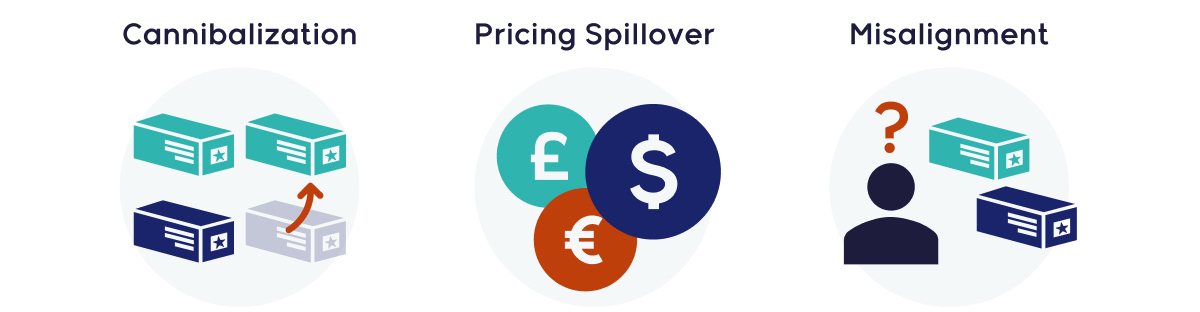
In markets with multiple segments requiring distinct commercial strategies, for example, a public‑market second brand launch, particularly if introduced by the originator manufacturer, may undermine value in a strategically relevant private or out-of-pocket market. If patients who value the manufacturer’s heritage view the second brand as a cheaper but equivalent alternative, this may potentially cause leakage.
Pricing spillovers, including international reference pricing, cross‑SKU linkage, and parallel‑import risk, can erode value beyond the launch market if not carefully managed.
Misalignment with local policy objectives and stakeholder expectations can create downstream reputational risks, particularly if second brands are perceived as duplicative.
Critically, the presence of a driver alone does not guarantee a viable opportunity. A second brand strategy should only be pursued where risks are understood, actively mitigated, and outweighed by projected incremental value.
Second Brands: Don’t Leave Value on the Table
Second brands aren’t always the solution, but failing to evaluate them systematically risks leaving significant value on the table. Effective late lifecycle management isn’t just about maximizing continued value from the brand; it’s about maximizing the full value of the asset.
At Align Strategy, we help teams understand when a second brand makes strategic sense, where and when it is viable, and how to deliver value while ensuring cross-functional alignment.
If you’re considering a second brand strategy for your mature brand, our late lifecycle experts would be more than happy to discuss the details further – please get in touch with us here.
Building a late lifecycle plan? Discover our PSVA Framework, designed to help teams break lifecycle tactics down into four categories: product, solution, value, and asset. his guide introduces the PSVA framework and explores how each component supports sustainable competitiveness after LOE, illustrated by real‑world case studies from across the pharma industry.