As a company’s portfolio grows and matures, the challenges facing the brands will change, with the need to manage the brand through evolving competitive dynamics, increasing payer pressure, and eventually loss of exclusivity and the entry of generic competition. Managing established brands often requires a specific, tailored approach known as late lifecycle management. Here we provide 5 best practices to consider when managing brands from mid-to-late lifecycle.
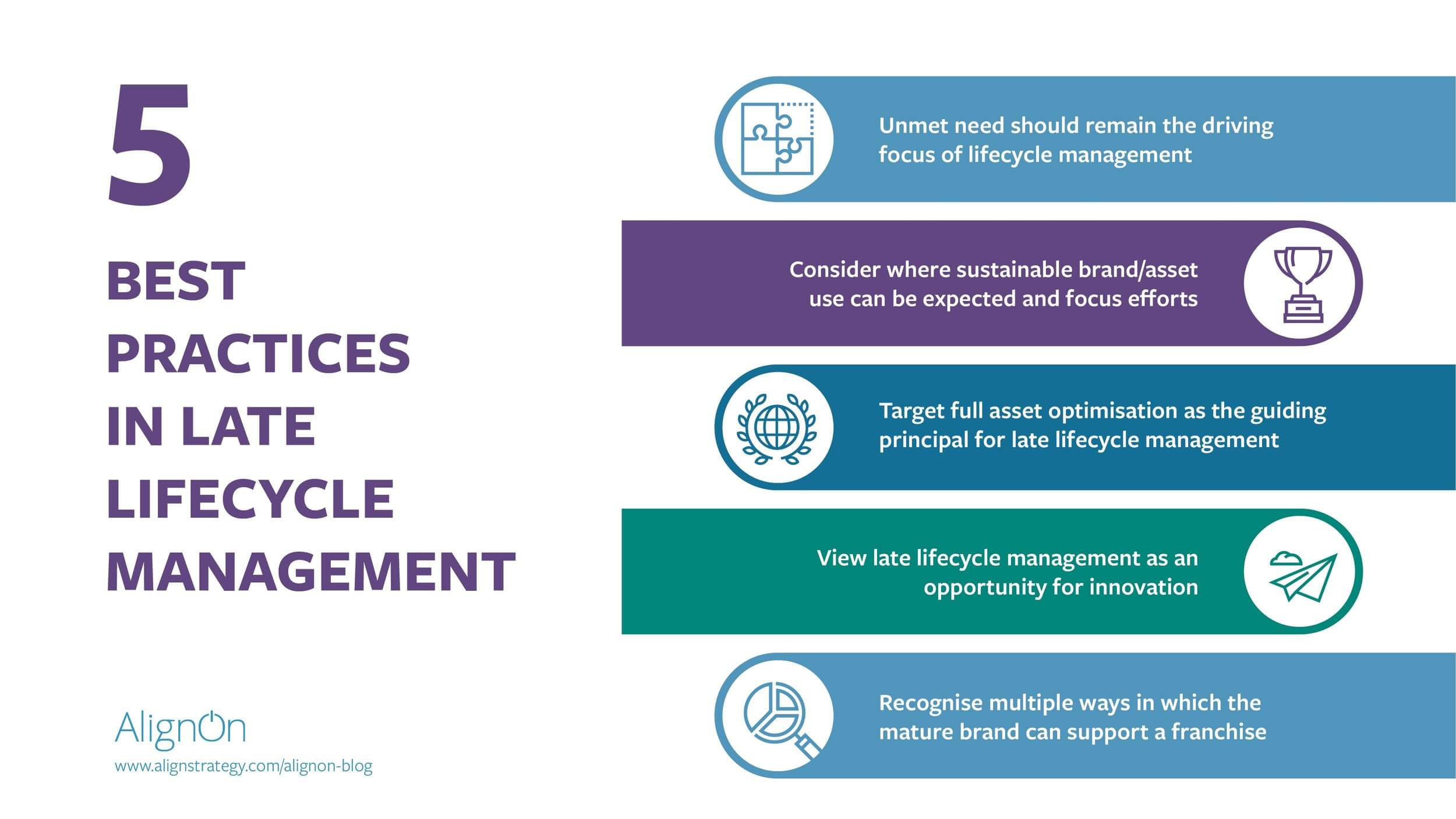
1. Unmet need should remain the driving focus of lifecycle management
- Map the key stakeholders that will likely influence molecule and brand choice through the late lifecycle period
- Understand the outstanding needs of the priority stakeholders and develop solutions accordingly
2. Consider where sustainable brand/asset use can be expected and focus efforts
- Target and support segments where a sustainable role for the molecule in treatment is viable
- Identify the key needs for geographic markets where brand use is likely to be sustainable and align focus accordingly
3. Target full asset optimization as the guiding principle for late lifecycle management
- Identify how best to maximize full value from manufacturing capacity, particularly for biologics where downscaling with reduced demand may lead to greater inefficiencies
- Consider optimization strategies for core brands, clone products, second brand strategy, and partnering approaches
4. View late lifecycle management as an opportunity for innovation
- Recognize opportunities to innovate in commercial and supply chain models to deliver value to the asset and to the organization
- Don’t be limited by what can be done in house – consider external approaches to support success
5. Recognize multiple ways in which the mature brand can support a franchise
- Ensure cash-flow optimization is central to LLC planning, but do not restrict strategic thinking to ‘cash-cow’ creation
- Consider opportunities to generate halo effects for the rest of the portfolio through LLC efforts
Next up, discover our PSVA Framework, which helps teams break lifecycle tactics down into four categories: product, solution, value, and asset. Our toolkit details what the PSVA framework is and why it’s useful with a closer look at the late lifecycle tactics available, illustrated with 10 pharma case studies.