For many pharmaceutical organizations, lifecycle management begins with a familiar conversation:
“What indication should we pursue next? Which geographies should we prioritize?”
These are both critical questions. Yet they are often evaluated as individual opportunities rather than as part of a broader strategy for how an asset will create value over time. As a result, lifecycle management can become fragmented and amount to a collection of individual initiatives rather than a coherent vision for the future of the asset.
There is a more effective way to approach early lifecycle planning: by thinking in terms of lifecycle pathways. Rather than asking, “What should we do next?”, pathway thinking asks a different question:
“How do we want this asset to create, expand, and sustain value over time?”
In this article, we’ll explain how your team can look to answer this question and develop an optimal pathway that maximizes your long-term asset value.
From Lifecycle Activities to Lifecycle Pathways
A lifecycle pathway represents the route through which an asset creates value throughout its lifecycle. Importantly, a pathway is not simply a list of activities. It is the intentional design of how different opportunities build upon one another over time.
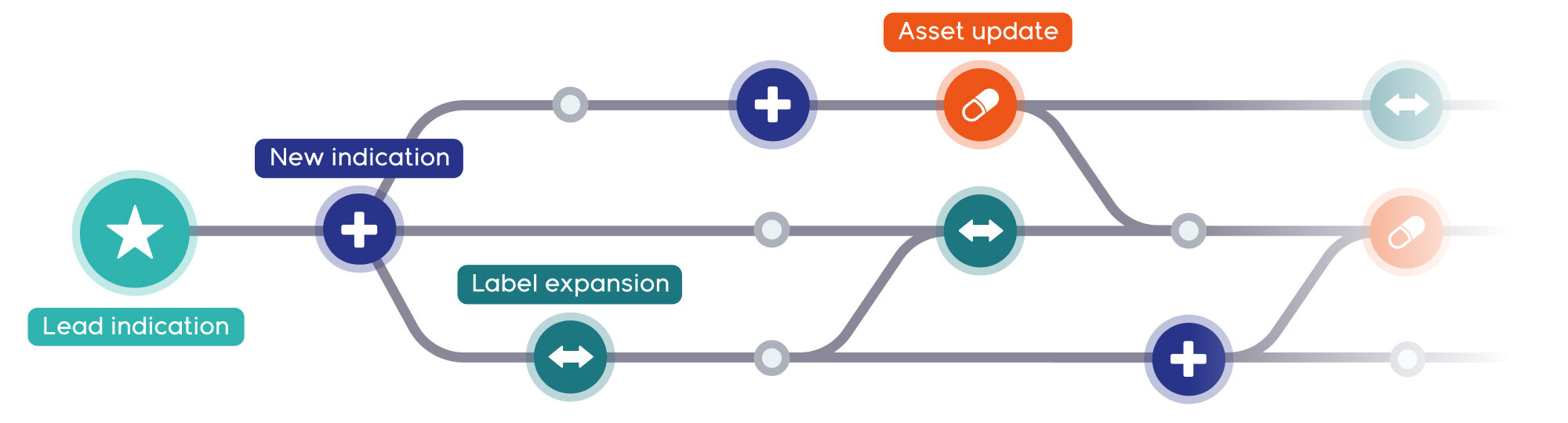
This distinction is particularly important during the early stages of development. Many of the decisions that ultimately shape long-term asset value are made years before launch. Choices around indication selection, evidence strategy, development priorities, formulation, route of administration, and target populations can all influence the opportunities available later in the lifecycle. Viewed individually, these decisions may appear tactical. Viewed collectively, they establish the future trajectory of the asset. This is why early lifecycle management should focus not only on identifying opportunities, but on architecting pathways.
The Architecture of a Lifecycle Pathway
Lifecycle pathways consist of two components: lead indication and value creation milestones.
The Starting Point: Lead Indication
Every pathway begins with a starting point. The lead indication establishes the initial evidence foundation, physician audience, commercial positioning, and strategic context for the asset. While often viewed primarily as a launch decision, the lead indication shapes much more than first approval. It influences the opportunities available later, the evidence that may be required to pursue them, and the ease with which future expansion can occur.
In many ways, the lead indication sets the pathway, establishing the foundation upon which future lifecycle decisions will be built.
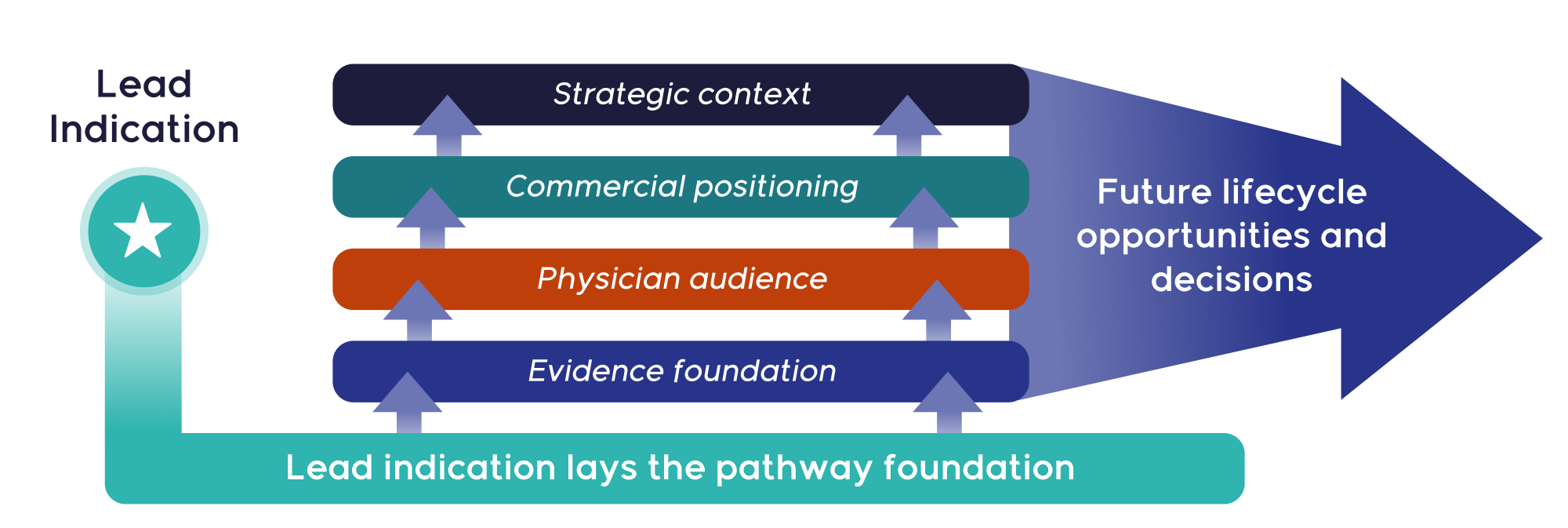
The challenge is that lead indications are often evaluated through a near-term lens. Factors such as probability of technical success, speed to market, and initial commercial opportunity are understandably important, but they do not always capture the impact that a lead indication may have on future lifecycle opportunities. As a result, pathways that could create greater long-term value may be unintentionally deprioritized before they are ever fully considered.
For this reason, selecting a lead indication is not simply about identifying the fastest or most attractive route to first approval. It is also about understanding how that decision may shape future expansion opportunities, evidence requirements, physician adoption, and strategic flexibility throughout the lifecycle.
Value Creation Milestones
Once the foundation has been established, organizations must determine how value will be created over time. These future inflection points – whether they enable an asset to expand its reach, strengthen its position, or extend its long-term relevance – can be thought of as the value creation milestones within the asset’s lifecycle pathway.
Historically, lifecycle discussions have focused heavily on indication and geographic expansion, and with good reason. New indications and markets often represent some of the largest opportunities for incremental value creation. Decisions around indication prioritization, indication sequencing, evidence generation, and timing can therefore have a profound impact on long-term asset value.

However, not all value creation milestones involve expanding into a new indication or market. Some may strengthen an asset’s position within existing populations; others may enable more treatment opportunities over time by improving compliance and persistence. The specific milestones will vary, but the principle remains the same: value can be created through multiple avenues beyond indication expansion alone.
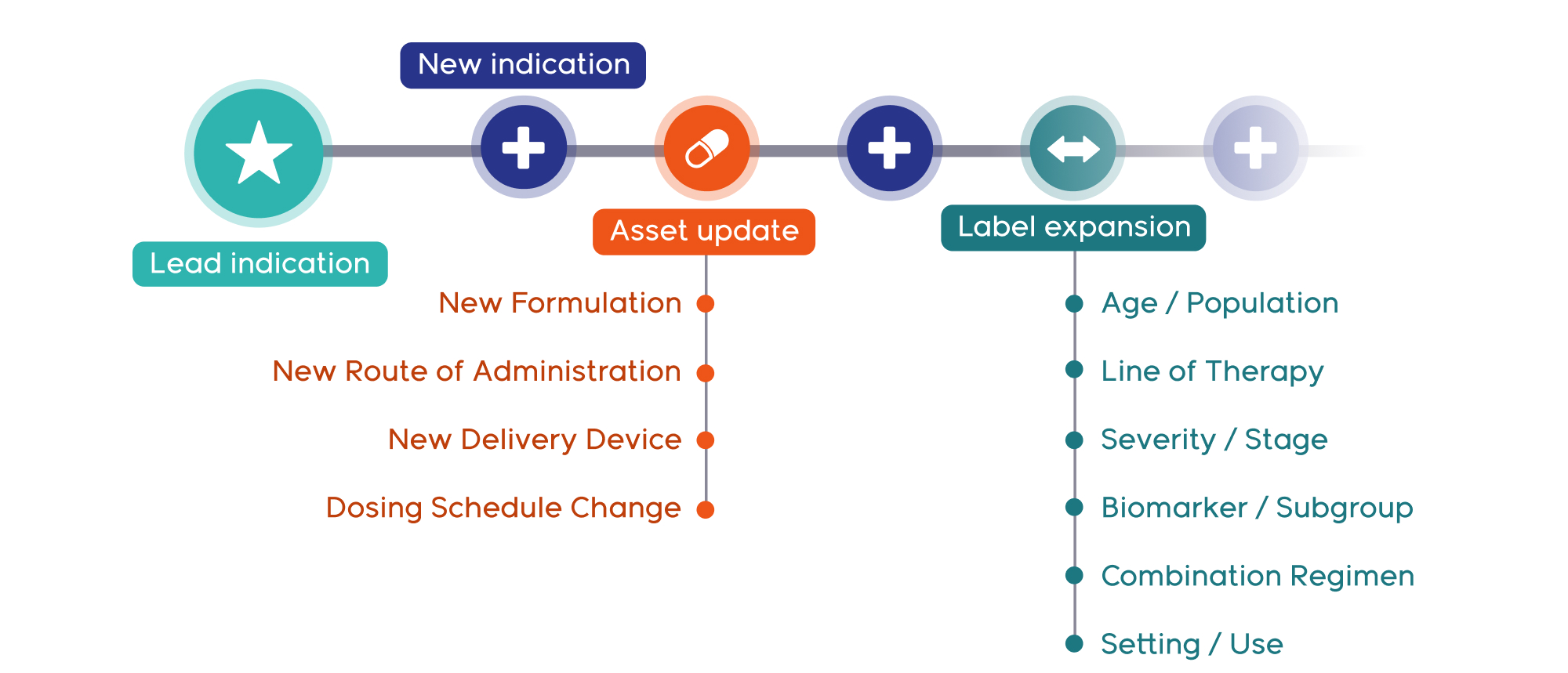
The challenge for organizations is not simply identifying potential milestones. It is determining which milestones are most important, how they fit together as part of an intentionally designed lifecycle pathway, and how timing and sequencing may influence long-term value creation.
Designing the Optimal Lifecycle Pathway
Understanding the structural components of a lifecycle pathway is only the first step. Equally important is understanding how those components contribute to long-term asset value and the mechanisms available to activate them.
Two different organizations may identify similar value creation milestones, yet pursue very different pathways based on their strategic objectives, competitive context, and ambitions for the asset.
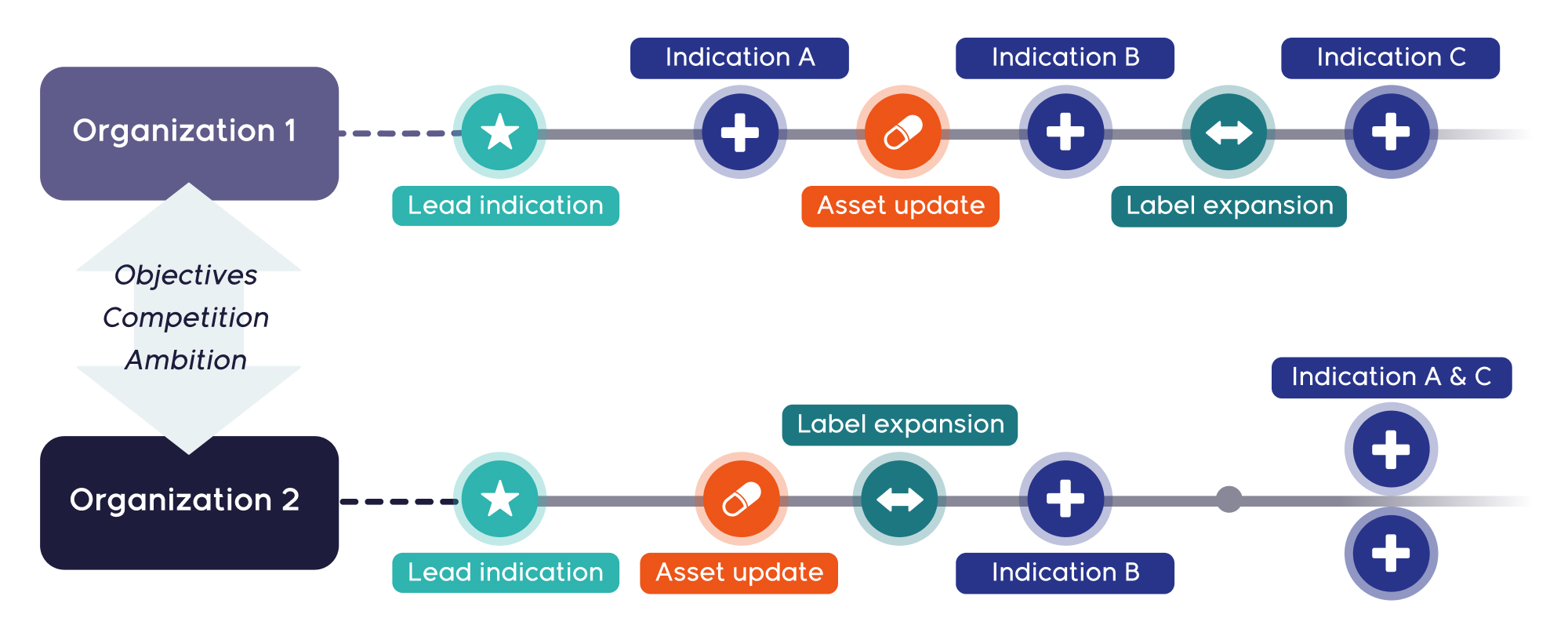
As a result, it is critical to rigorously evaluate and cross-functionally align on both the lifecycle objectives being pursued and the opportunity domains most likely to support them.
- Lifecycle objectives define the desired growth outcomes
- Opportunity domains provide a structured way to explore where those outcomes may be unlocked
Together, they help organizations identify and prioritize the value creation milestones that will ultimately shape the lifecycle pathway.
Lifecycle Objectives
Before identifying and prioritizing individual value creation milestones, organizations should have a clear view of the growth objectives they are seeking to achieve. As discussed in our previous article on Breadth, Depth, and Sustainability, not all lifecycle pathways are designed to achieve the same balance of objectives. Some will focus heavily on expanding the addressable population. Others focus more on strengthening adoption within existing populations. While others primarily aim to maximize total treatment opportunities over the patient’s lifetime.
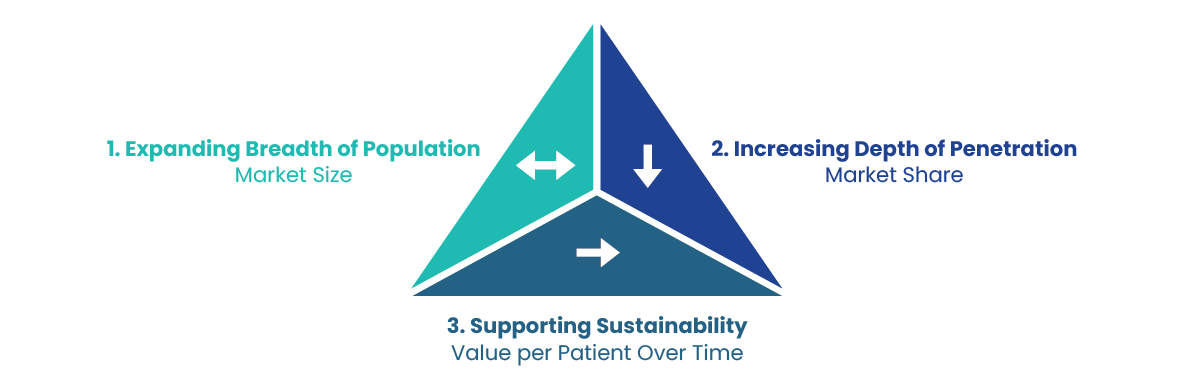
Importantly, the same lifecycle objective may be pursued through many different value creation milestones. Establishing a clear view of which objectives matter most can therefore help organizations identify, prioritize, and evaluate opportunities more effectively. It can also help ensure that lifecycle pathways are aligned with long-term ambitions, while revealing opportunities that may be overlooked when planning focuses too narrowly on a single dimension of growth.
Opportunity Domains
Once organizations have aligned on the lifecycle objectives they are seeking to achieve, attention should turn to identifying the most effective routes for delivering them.
The challenge is that opportunities can emerge from many different sources. Without a structured approach, it can be easy to focus on the most obvious opportunities while overlooking others with equal, or even greater, potential.
Opportunity domains provide a useful way to systematically explore where future value creation milestones may exist. Rather than viewing lifecycle management solely through the lens of indication expansion, these domains encourage organizations to evaluate opportunities across Label evolution, Evidence generation, Product and asset innovation, and broader Solution and system-level change (LEPS).
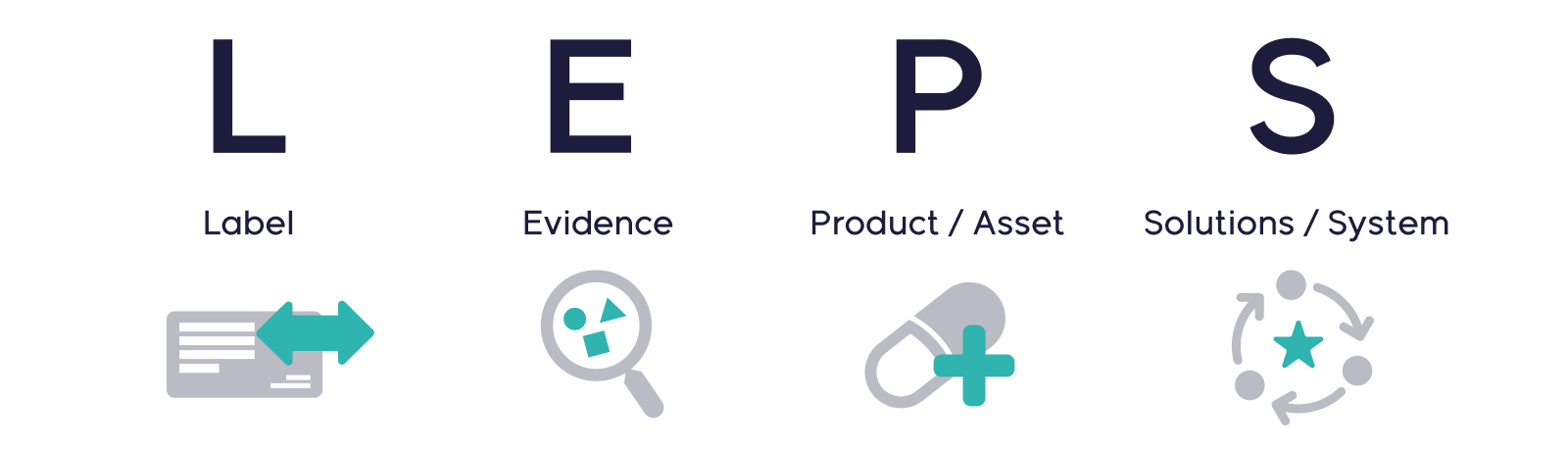
Importantly, opportunity domains do not define the milestones themselves. Instead, they provide a structured framework for identifying and evaluating potential routes for growth. Organizations that explore multiple domains are often better positioned to uncover opportunities and challenge assumptions. This enables the design of more comprehensive lifecycle pathways, where multiple milestones work together to amplify value over time.
We will explore each of the LEPS opportunity domains in greater detail later in this article series.
Why Pathway Architecture Requires Cross-Functional Design
No single function owns the lifecycle pathway. Clinical teams contribute to generating evidence and demonstrating value. Commercial teams will focus on future market positioning, adoption dynamics, and competitive advantage. Market access teams assess reimbursement requirements, pricing implications, and the evidence needed to support payer value propositions. Regulatory teams shape the feasibility of future indication expansions and broader label evolution. While development and CMC teams will influence future formulation, delivery, and product optimization opportunities.
Each perspective is important. Yet many of the decisions that ultimately influence long-term asset value are made years before that value is realized.
A formulation decision made today may influence future adoption. An evidence strategy may unlock (or constrain) future access opportunities. A lead indication decision may determine which expansion pathways remain viable later in the lifecycle.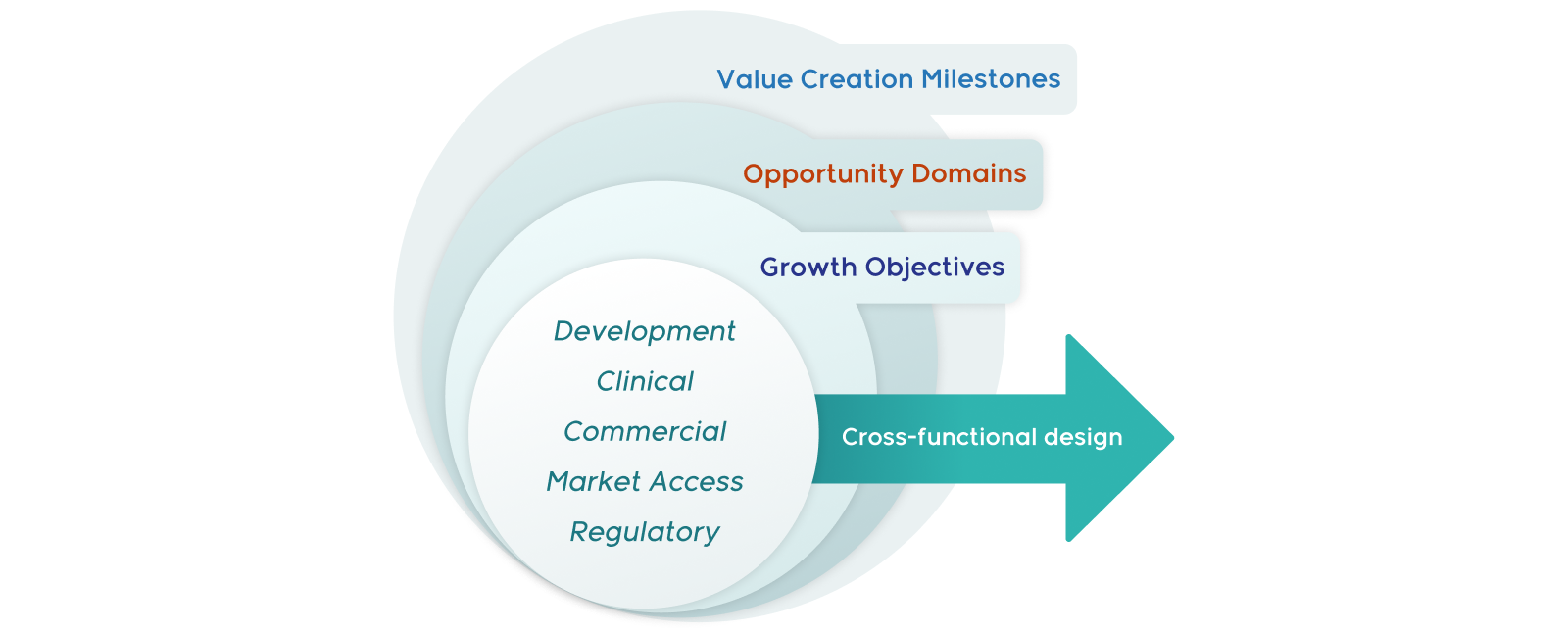
As a result, lifecycle pathway design cannot be treated as a series of independent functional decisions. It requires a shared understanding of the growth objectives being pursued, the opportunity domains being explored, and the value creation milestones most critical to long-term success.
Organizations that bring these perspectives together early are better positioned to identify dependencies, align investment decisions, and design pathways that maximize future optionality and value creation.
Putting Pathway Thinking into Practice
At its core, early lifecycle management is not simply about identifying more opportunities. It is about deliberately designing how value will be created over time. By establishing a clear pathway early, organizations can align around a common vision for the asset, identify opportunities that may otherwise be overlooked, and ensure that individual decisions contribute to a broader long-term strategy.
Just as importantly, pathway thinking provides a framework for evaluating alternative futures before they become necessary. Of course, no pathway unfolds exactly as planned. Competitive dynamics evolve, evidence emerges, and priorities shift. The most effective organizations therefore think not only about the pathway they intend to pursue, but the alternative pathways they may need to activate to preserve flexibility as circumstances evolve.
If you’re looking to build better pathways to long-term value for your asset, Align strategy can help. Whether you’re at the beginning of shaping your lifecycle plan, or are looking for review and pressure-testing of established strategies, our team can provide the expert guidance and support you need. Discover our range or early lifecycle management programs here.

Now that we have explored the role and architecture of a lifecycle pathway, please check out the following article which looks at how to approach indication sequencing in order to maximize an asset’s commercial opportunities and create durable long-term value.